La astrofísica Kelly Holley-Bockelman, de la Universidad de Vanderbilt (Estado de Tennessee) ha obtenido la dotación más elevada de la historia para profesores jóvenes, en el área de astronomía, que otorga la Fundación Nacional para la Ciencia de Estados Unidos. Son más de un millón de dólares que destinará a proseguir sus estudios sobre los agujeros negros y a financiar el programa que pretende conseguir que su universidad sea la que produzca más doctores en física y astronomía de las minorías sociales hasta ahora discriminadas.
I try to post some interesting "any stuff" which I call "etc..." and QUITE SIMPLE physics
Sunday, December 20, 2009
Tuesday, December 15, 2009
CLIMATE CHANGE IS NATURAL: 100 REASONS WHY
HERE are the 100 reasons, released in a dossier issued by the European Foundation, why climate change is natural and not man-made:
1) There is “no real scientific proof” that the current warming is caused by the rise of greenhouse gases from man’s activity.
Read 99 more reasons at this page link ( above )
Friday, December 11, 2009
E=mc2 is Wrong – Einstein’s “Special Relativity” Fundamentally Flawed
Is Albert Einstein’s Special Relativity incompatible with the very equations upon which science’s greatest theory is built ?. New observations made by many scientists and engineers appear to contradict the great German scientist’s ideas. Apparently there are implicit contradictions present within Relativity’s foundational ideas, documents and equations. One individual has even pointed that quotations from the 1905 document and Einstein’s contemporaries as well as interpretations of the Relativity equations clearly and concisely describe a confused and obviously erroneous theory. It is time therefore, for science to update its thinking on this theory with a comprehensive analysis of the history leading up to, during and after that revolutionary year of Special Relativity.
Saturday, December 5, 2009
Brain Stimulation with Infrared Light
Researchers have recently found that infrared light has the capability of stimulating brain cells. Infrared light causes the excitation of neurons thus altering their activity. This new type of brain stimulation method is referred to as infrared nerve stimulation (INS). INS has a variety of applications for altering the functioning of central nervous system disorders. For many brain disorders, brain activity is altered in comparison to more normal states. Infrared light has a very high selectivity and can target very small sub-populations of brain cells. This type of stimulation could potentially reduce many of the side effects of current brain stimulation.
Friday, December 4, 2009
Synthetic magnetism achieved by optical methods: Technique enables unprecedented insights
For the first time, physicists have used laser light to create
synthetic magnetism, an exotic condition in which neutral atoms suddenly begin to behave as if they were charged particles interacting with a magnetic field -- even though no such field is present and the atoms have no charge. The achievement provides unprecedented insights into fundamental physics and the behavior of quantum objects, and opens up entirely new ways to study the nature of condensed-matter systems that were barely imaginable before.
Friday, November 13, 2009
The Dark Attractor: What's Pulling the Milky Way Towards It at 14-Million MPH?
Astronomers have known for years that something unknown apears to be pulling our Milky Way and tens of thousands of other galaxies toward itself at a breakneck 22 million kilometers (14 million miles) per hour. But they couldn’t pinpoint exactly what, or where it is.
A huge volume of space that includes the Milky Way and super-clusters of galaxies is flowing towards a mysterious, gigantic unseen mass named mass astronomers have dubbed "The Great Attractor," some 250 million light years from our Solar System.
The Milky Way and Andromeda galaxies are the dominant structures in a galaxy cluster called the Local Group which is, in turn, an outlying member of the Virgo supercluster. Andromeda--about 2.2 million light-years from the Milky Way--is speeding toward our galaxy at 200,000 miles per hour...
Friday, October 30, 2009
EconoPhysics (On offer: laws of nature)
In yesterday's post I asked why economics doesn't have a few laws of nature that could prevent people from basing decisions on the financial equivalent of a perpetual motion machine. Enter the econophysicists, academics, ( usually physicists delving outside the field and not economists borrowing from physics ), who want to apply the rigorous mathematical methods of physics to understanding the economy. By modeling the economy as a collection of minor actors, like the molecules of gas,
they hope to uncover how individual actions give rise to the emergent, large-scale phenomena that have sweeping effects—the booms and busts that take us by surprise.
Sunday, October 25, 2009
Preserving the past for the future; Grant aids archival work at Institute. (Old Einstein pictures)
Princeton Township --The archivist lifted the pearl-gray cover off of an oversized folio of photographs recently found at the The National Medal of Science, Awarded by the President of the United States to Kurt Gödel in 1974, part of the Institute for Advanced Study archive collection, photographed on Friday, October 23, 2009. here. From beneath the protective tissue paper emerged a black and white photograph of the great, leonine face of Albert Einstein.
Tuesday, October 20, 2009
Stephen Wolfram: The Man Who Cracked The Code to Everything ...
..."The climax of the book is the principle of computational equivalence, which may as well be called "Wolfram's law." After hundreds of pages of laying groundwork, presenting case after case of visual examples where simple rules generate counterintuitively complex results, Wolfram concludes that this phenomenon is overwhelmingly commonplace - it's at the base of everything from morphology to traffic jams. Then he goes further, stating that once a system achieves a certain, easily attainable degree of complexity, it's reached the point of maximum complexity, as measured by the computation required to crank out the end result. Everything at that level of complexity - and that means almost everything you can think of, from human thought to rain hitting pavement - is exactly as complex as anything else."...
Labels:
Broken Symmetry,
complex systems,
Information Theory,
internet,
life,
Many-Body Theory,
nanophysics,
personajes,
physics,
Quantum Mechanics,
relativity,
simulation,
sociophysics,
statistics
String theory pioneer succeeds Hawking in Lucasian role
One of the founders of string theory has been elected to replace Stephen Hawking as Cambridge University's Lucasian Professor of Mathematics.
Professor Michael Green becomes the 18th holder of the professorship.
Prof Green, who currently holds the John Humphrey Plummer Professorship of Theoretical Physics is one of the founders of string theory, generally regarded as the most successful candidate to date to unify quantum theory and general relativity, the two fundamental physical theories of the early twentieth century, and thereby formulate a consistent quantum theory of gravity.
Thursday, October 15, 2009
Richard Dawkins: The world's most famous atheist
His new book, The Greatest Show on Earth: The Evidence for Evolution, arrives in the celebratory year that marks Darwin's 200th birthday and the 150th anniversary of the publication of the On the Origin of the Species.
Richard Dawkins home page
Douglas Eadline, Ph.D.: The Return of the Vector Processor
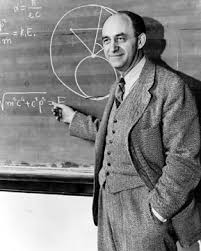
Before I dive into Fermi the GPU, I wanted to take a moment and pay tribute to Enrico Fermi the person — for whom the new GPU was named. For you young whippersnappers out there, Enrico Fermi is one of the giants of physics. He was instrumental in advancing physics on many fronts including quantum theory, nuclear and particle physics, and statistical mechanics ( a favorite subject of mine ). He had a rare combination of talent that allowed him to be both an excellent theorist and experimentalist. His legacy is legendary as he has an element named after him ( Fermium, a synthetic element created in 1952 ), a national lab ( the Fermi National Accelerator Lab ), and a class of particles that bare his name ( fermions ). No lightweight this Fermi fellow.
Tuesday, October 6, 2009
There has been no increase in solar irradiance since at least 1978
There has been work done reconstructing the solar irradiance record over the last century, before satellites were available. According to the Max Planck Institute, where this work is being done, there has been
no increase in solar irradiance since around 1940
This reconstruction does show an increase in the first part of the 20th century, which coincides with the warming from around 1900 until the 1940s. It's not enough to explain all the warming from those years, but it is responsible for a large portion. See this chart of observed temperature, modelled temperature, and variations in the major forcings that contributed to 20th century climate.Historical Physicist Smackdown Explained: Electric Theory
So, who are the people in yesterday's poll about theoretical physicists, and why should you know them?
Three of the four shared a Nobel Prize for developing quantum electrodynamics. In reverse order of voting:
Julian Schwinger was an American physicist who came up with a very formal, mathematically rigorous way of describing the behavior of electrons interacting with light. This turns out to be a hard problem, because any attempt to calculate an electron's energy by simple, straightforward means ends up giving an infinite answer. Schwinger helped "renormalize" the theory, getting rid of the infinity with some elegant mathematics.
Deconstructing the electron
Explaining the behavior of interacting electrons in a solid is one of the long-standing problems in condensed matter. For most systems, the problem has been masterfully addressed by Landau, who showed that even though interactions can be very large, excitations behaving essentially as free fermions still exist in the system. The Landau Fermi-liquid theory allows sweeping the interactions under the rug and saying that the properties of many materials will be very similar to those of free electrons. However, this theory fails spectacularly when an electron gas is confined to one dimension. In that case, a completely new universality class appears, and the Fermi liquid turns into a Luttinger liquid.
download .pdf ( free )
Superheavy Element 114 Finally Re-created
By firing calcium isotopes into a plutonium target inside a particle accelerator, scientists at Lawrence Berkeley National Laboratory have finally confirmed the Russian discovery of the superheavy element 114.
It wasn’t easy. It took more than a week of running the experiment to generate a measly two atoms of the stuff, which they reported in Physical Review Letters last week. It’s basic science at the outer limits of matter.
Friday, September 25, 2009
Pedagogía by Andrés Ibáñez
Pedagogía. Enseñar a enseñar. La falacia dice que
no sólo es necesario saber de algo, sino que también es necesario saber enseñarlo. Este principio o axioma casi místico se basa, como el amable lector habrá visto enseguida, en una presuposición no menos axial y mística, y no menos falaz que la anterior: A saber, que todos aquellos que no son pedagogos, no son ni pueden ser nunca buenos profesores.
Wednesday, September 23, 2009
Michelson–Morley experiment is best yet
Physicists in Germany have performed the most precise Michelson-Morley experiment to date,
confirming that the speed of light is the same in all directions
The experiment, which involves rotating two optical cavities, is about 10 times more precise than previous experiments – and a hundred million times more precise than Michelson and Morley's 1887 measurement.Thursday, September 17, 2009
U of S helps discover new family of superconductors
The superconductor family Tse discovered in conjunction with a number of international researchers is a group of hydrogen compounds known as molecular hydrides. Tse and graduate student Yansun Yao worked out the theoretical basis for the experiment as well as the key chemical structures involved, while German scientist Mikhail Eremets did the lab work.
First Solid Evidence for a Rocky Exoplanet
Mass and density of smallest exoplanet finally measured.
The longest set of HARPS measurements ever made has firmly established the nature of the smallest and fastest-orbiting exoplanet known, CoRoT-7b, revealing its mass as five times that of Earth's. Combined with CoRoT-7b's known radius, which is less than twice that of our terrestrial home, this tells us that the exoplanet's density is quite similar to the Earth's, suggesting a solid, rocky world. The extensive dataset also reveals the presence of another so-called super-Earth in this alien solar system.
Subscribe to:
Posts (Atom)