Showing posts with label physics. Show all posts

Monday, November 15, 2010

Demonic device converts information to energy

The laws of physics say that you can't get energy for nothing -- worse still, you will always get out of a system less energy than you put in. But a nanoscale experiment inspired by a nineteenth-century paradox that seemed to break those laws now shows that you can generate energy from information.

Wednesday, October 27, 2010

Holometer experiment to test if the universe is a hologram

Many ideas in theoretical physics involve extra dimensions, but the possibility that the universe has only two dimensions could also have surprising implications. The idea is that space on the ultra-small Planck scale is two-dimensional, and the third dimension is inextricably linked with time. If this is the case, then our three-dimensional universe is nothing more than a hologram of a two-dimensional universe.

Tuesday, October 26, 2010

Topological insulators could help define fundamental constants

A newly discovered class of materials known as "topological insulators" could help physicists to obtain new ways of defining the three basic physical constants – the speed of light (c); the charge of the proton (e); and Planck’s constant (h). That’s the claim of a team of physicists in the US, which has proposed a new experiment to measure the fine-structure constant (α), which is a function of h, c and e, by scattering light from such a material. Topological insulators are unusual in that electrical current flows well on their surface, but not through their bulk.

Saturday, October 16, 2010

The quest for dilute ferromagnetism in semiconductors: Guides and misguides by theory

A material that exhibits both ferromagnetic and semiconductor properties offers the exciting prospect of combining nonvolatile magnetic storage and conventional semiconductor electronics in a single device. Magnetic semiconductors offer a number of interesting possibilities in the pursuit of  spintronics , a branch of science and technology that exploits the spin dimension of the electron in addition to its charge, for novel electronic devices. These materials combine the properties of a semiconductor and a magnetic material, providing, for instance, a way to create 100 % spin-polarized currents, and by the same token, the promise of electrical control of magnetic effects. While in some magnetic semiconductors, for example, magnetite, all of the material’s constituent ions are intrinsically magnetic (  concentrated magnets  ), the most recent focus has been on nonmagnetic semiconductor host materials that can be doped by a small amount of magnetic transition-metal ions or by defects that promote magnetism (  dilute magnets  ).

Saturday, September 25, 2010

Understanding behavioural patterns: why bird flocks move in unison

Animal flocks, be it honeybees, fish, ants or birds, often move in surprising synchronicity and seemingly make unanimous decisions at a moment’s notice, a phenomenon which has remained puzzling to many researchers.

New research published today in the New Journal of Physics ( co-owned by the Institute of Physics and German Physical Society ), uses a particle model to explain the collective decision making process of flocks of birds landing on foraging flights.

Using a simple self-propelled particle (SPP) system, which sees the birds represented by particles with such parameters as position and velocity, the researchers from Budapest, Hungary, find that the collective switching from the flying to the landing state overrides the individual landing intentions of each bird.

Friday, September 24, 2010

Relativity with a human touch

In the famous twin paradox, a sibling who journeys in a fast-moving spacecraft will return home younger than the sibling who remained on Earth. While this apparent slowing of time occurs whenever a body is set in motion, it had been much too small to be detected for movement on a human scale.

Who wants to live for ever? A scientific breakthrough could mean humans live for hundreds of years

A genetically engineered organism that lives 10 times longer than normal has been created by scientists in California. It is the greatest extension of longevity yet achieved by researchers investigating the scientific nature of ageing.

Einstein's theory is proved – and it is bad news if you own a penthouse

The world's most accurate clock has neatly shown how right Albert Einstein was 100 years ago, when he proposed that time is a relative concept and the higher you live above sea level the faster you should age.

Thursday, July 22, 2010

Quantum Time Machine Lets You Travel to the Past Without Fear of Grandfather Paradox

Looking to build a time machine but nervous about the classic grandfather paradox, aka the Marty McFly conundrum, aka the idea that you might unwittingly do something that causes you to never exist in the first place? An MIT professor and a few of his quantum quoting buddies have published a theory that  allows for time travel while circumventing the grandfather paradox . All you need is a quantum teleportation device and a precise understanding of the idea of postselection--Flux Capacitor optional.

Monday, June 7, 2010

Physicsts reveal how to cope with 'frustration'

For most people, frustration is a condition to be avoided. But for scientists studying certain "frustrated" ensembles of interacting components -that is, those which cannot settle into a state that minimizes each interaction-

 it may be the key to understanding a host of puzzling phenomena that affect systems from neural networks and social structures to protein folding and magnetism.

Friday, May 21, 2010

Vitaly Lazarevich Ginzburg

Vitaly Lazarevich Ginzburg, who made important contributions in many fields of theoretical physics, passed away on 8 November 2009 in Moscow; he had suffered for several years from a blood disease.

Sunday, April 18, 2010

Laser technology provides a quantum leap (La tecnología láser da un salto cuántico)

En la Universidad de Innsbruck ( Austria ), un equipo de investigación financiado con fondos comunitarios ha creado un láser de átomo único que se rige por el mismo principio que los láseres clásicos pero que además presenta propiedades cuánticas en sus interacciones entre átomos y fotones. Los resultados de su investigación, publicados en la revista Nature Physics, ampliarán el conocimiento que se posee de las propiedades de los láseres y podrán utilizarse para medir composiciones de oligoelementos gaseosos e isótopos de carbono en el aire y el suelo.
At the University of Innsbruck ( Austria ), a team of private funded research has created a single atom laser which is governed by the same principle as lasers but also presents classical quantum properties in interactions between atoms and photons. The results of their research, published in the journal Nature Physics, expand the knowledge of the lasers properties and may be used to measure gas compositions of trace elements and isotopes of carbon in the air and soil.

Thursday, March 18, 2010

A Theory Set in Stone: An Asteroid Killed the Dinosaurs, After All

Although any T. Rex–enthralled kid will tell you that a gigantic asteroid wiped the dinosaurs off the planet, scientists have always regarded this impact theory as a hypothesis subject to revision based on further evidence gathered from around the globe. Other possible causes, such as volcanism and smaller, multiple asteroid strikes, never actually went away,

and over the years researchers raised important points that did not fully jibe with a history-changing celestial impact near the Yucatan peninsula one awful day some 65.5 million years ago.

Sunday, December 20, 2009

AstroPhysics: La profesora del millón de dólares

La astrofísica Kelly Holley-Bockelman, de la Universidad de Vanderbilt (Estado de Tennessee) ha obtenido la dotación más elevada de la historia para profesores jóvenes, en el área de astronomía, que otorga la Fundación Nacional para la Ciencia de Estados Unidos. Son más de un millón de dólares que destinará a proseguir sus estudios sobre los agujeros negros y a financiar el programa que pretende conseguir que su universidad sea la que produzca más doctores en física y astronomía de las minorías sociales hasta ahora discriminadas.

Friday, December 11, 2009

E=mc2 is Wrong – Einstein’s “Special Relativity” Fundamentally Flawed

Is Albert Einstein’s Special Relativity incompatible with the very equations upon which science’s greatest theory is built ?. New observations made by many scientists and engineers appear to contradict the great German scientist’s ideas. Apparently there are implicit contradictions present within Relativity’s foundational ideas, documents and equations. One individual has even pointed that quotations from the 1905 document and Einstein’s contemporaries as well as interpretations of the Relativity equations clearly and concisely describe a confused and obviously erroneous theory. It is time therefore, for science to update its thinking on this theory with a comprehensive analysis of the history leading up to, during and after that revolutionary year of Special Relativity.

Sunday, October 25, 2009

Preserving the past for the future; Grant aids archival work at Institute. (Old Einstein pictures)

Princeton Township --The archivist lifted the pearl-gray cover off of an oversized folio of photographs recently found at the The National Medal of Science, Awarded by the President of the United States to Kurt Gödel in 1974, part of the Institute for Advanced Study archive collection, photographed on Friday, October 23, 2009. here. From beneath the protective tissue paper emerged a black and white photograph of the great, leonine face of Albert Einstein.

Tuesday, October 20, 2009

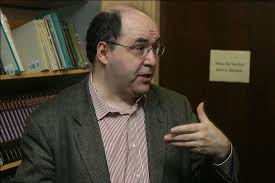
Stephen Wolfram: The Man Who Cracked The Code to Everything ...

..."The climax of the book is the principle of computational equivalence, which may as well be called "Wolfram's law." After hundreds of pages of laying groundwork, presenting case after case of visual examples where simple rules generate counterintuitively complex results, Wolfram concludes that this phenomenon is overwhelmingly commonplace - it's at the base of everything from morphology to traffic jams. Then he goes further, stating that once a system achieves a certain, easily attainable degree of complexity, it's reached the point of maximum complexity, as measured by the computation required to crank out the end result. Everything at that level of complexity - and that means almost everything you can think of, from human thought to rain hitting pavement - is exactly as complex as anything else."...

String theory pioneer succeeds Hawking in Lucasian role

One of the founders of string theory has been elected to replace Stephen Hawking as Cambridge University's Lucasian Professor of Mathematics. Professor Michael Green becomes the 18th holder of the professorship. Prof Green, who currently holds the John Humphrey Plummer Professorship of Theoretical Physics is one of the founders of string theory, generally regarded as the most successful candidate to date to unify quantum theory and general relativity, the two fundamental physical theories of the early twentieth century, and thereby formulate a consistent quantum theory of gravity.

Thursday, October 15, 2009

Douglas Eadline, Ph.D.: The Return of the Vector Processor

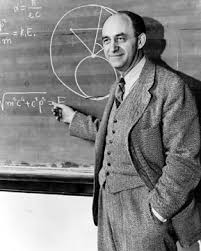
Before I dive into Fermi the GPU, I wanted to take a moment and pay tribute to Enrico Fermi the person — for whom the new GPU was named. For you young whippersnappers out there, Enrico Fermi is one of the giants of physics. He was instrumental in advancing physics on many fronts including quantum theory, nuclear and particle physics, and statistical mechanics ( a favorite subject of mine ). He had a rare combination of talent that allowed him to be both an excellent theorist and experimentalist. His legacy is legendary as he has an element named after him ( Fermium, a synthetic element created in 1952 ), a national lab ( the Fermi National Accelerator Lab ), and a class of particles that bare his name ( fermions ). No lightweight this Fermi fellow.

Tuesday, October 6, 2009

Historical Physicist Smackdown Explained: Electric Theory

So, who are the people in yesterday's poll about theoretical physicists, and why should you know them? Three of the four shared a Nobel Prize for developing quantum electrodynamics. In reverse order of voting: Julian Schwinger was an American physicist who came up with a very formal, mathematically rigorous way of describing the behavior of electrons interacting with light. This turns out to be a hard problem, because any attempt to calculate an electron's energy by simple, straightforward means ends up giving an infinite answer. Schwinger helped "renormalize" the theory, getting rid of the infinity with some elegant mathematics.