Showing posts with label internet. Show all posts

Saturday, May 22, 2010

Math behind Internet encryption wins top award: Abel prize awarded to number theorist John Tate

The Abel prize--considered the "Nobel" prize of mathematics--has been awarded to John Tate, recently retired from the University of Texas at Austin, for his work on algebraic number theory, the mathematical discipline that deals with connections between whole numbers and lies at the heart of Internet security.
Established in 2002, the Abel Prize is presented annually by the King of Norway and carries a cash award of $1 million.

Ian Stewart Try to find the prime factors of a 200-digit number with pencil and paper--or even with a computer program--and it would take longer than the age of the Universe .

John Tate Biography in Wikipedia

Friday, May 21, 2010

CSS3 Examples and Code

We present a set of CSS3 examples which include the state of art in web design. Simple code for the examples are included.
 
http://fisica.ciens.ucv.ve/felix/css3/

Tuesday, October 20, 2009

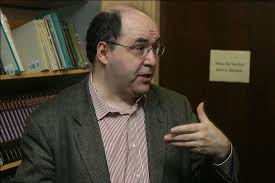
Stephen Wolfram: The Man Who Cracked The Code to Everything ...

..."The climax of the book is the principle of computational equivalence, which may as well be called "Wolfram's law." After hundreds of pages of laying groundwork, presenting case after case of visual examples where simple rules generate counterintuitively complex results, Wolfram concludes that this phenomenon is overwhelmingly commonplace - it's at the base of everything from morphology to traffic jams. Then he goes further, stating that once a system achieves a certain, easily attainable degree of complexity, it's reached the point of maximum complexity, as measured by the computation required to crank out the end result. Everything at that level of complexity - and that means almost everything you can think of, from human thought to rain hitting pavement - is exactly as complex as anything else."...

Sunday, September 13, 2009

HTML5 Canvas Cheat Sheet v. 1.1

Author: Jacob Seidelin

video – more than just a tag

This article is written by  Paul Rouget , Mozilla contributor and purveyor of extraordinary Open Web demos.

Starting with Firefox 3.5, you can embed a video in a web page like an image.

This means video is now a part of the document, and finally, a first class citizen of the Open Web. Like all other elements, you can use it with CSS and JavaScript. Let’s see what this all means …

Monday, August 31, 2009

AAAI Fall Symposium - Nov. 5 - 7, 2009 - Arlington, VA

Complex Adaptive Systems and the Threshold Effect: Views from the Natural and Social Sciences

Most interesting phenomena in natural and social systems include constant transitions and oscillations among their various phases. Wars, companies, societies, markets, and humans rarely stay in a stable, predictable state for long. Randomness, power laws, and human behavior ensure that the future is both unknown and challenging. How do events unfold ? When do they take hold ? Why do some initial events cause an avalanche while others do not ? What characterizes these events ? What are the thresholds that differentiate a sea change from a non-event ?

Complex Adaptive Systems have proven to be a powerful tool for exploring these and other related phenomena. We characterize a general CAS model as having a large number of self-similar agents that:

  1. utilize one or more levels of feedback;
  2. exhibit emergent properties and self-organization; and
  3. produce non-linear dynamic behavior.

Advances in modeling and computing technology have led not only to a deeper understanding of complex systems in many areas, but they have also raised the possibility that similar fundamental principles may be at work across these systems, even though the underlying principles may manifest themselves differently.

Tuesday, July 7, 2009

40+ Excellent Freefonts For Professional Design

The importance of typography in design can’t be overestimated. The accuracy, precision and balance of geometric forms can give letters the elegance and sharpness they deserve. Besides, elegant fonts can help to convey the message in a more convenient way. In fact, while there are many excellent professional fonts (we’ve presented some of them in our article 80 Beautiful Typefaces For Professional Design) there are literally thousands of free low-quality fonts which you would never use for professional designs.

HTML 5 Won’t Be Ready Until 2022. Yes, 2022

If you’re a web developer looking forward to the new tools in HTML 5, the next generation of the language that powers the web, we have some bad news for you — you’re going to waiting a while. Ian Hickson, the editor of the HTML 5 specification, recently outlined the time table for HTML 5 and, even assuming browser manufacturers embrace HTML 5 when it reaches the final draft stage, that puts HTML 5’s widespread adoption at 2012. Worse, the final proposed recommendation won’t be released until 2022.

Thursday, July 2, 2009

Patrick Cox: The Quantum Leap of Quantum Computing

The electronics and computing industries are getting primed for a massive transformation in the years ahead. Quantum technologies that were only theories in scientific journals just a few years ago are being prototyped in labs now. These new components will change the way we live forever. They will also create transformational profit opportunities.

Tuesday, June 23, 2009

Ayuda de Webmasters

La finalidad de este foro es proporcionar un lugar de encuentro para que los webmasters se ayuden entre ellos y, en ocasiones, nosotros aportemos consejos, clarificaciones y os mantengamos al día de las novedades. Antes de enviar una pregunta os aconsejamos echar un vistazo a estos recursos y si quieres seguirla utiliza su feed: ...

W3C: Web Storage

This specification defines two APIs for persistent data storage in Web clients: one for accessing key-value pair data and another for accessing structured data.

HTML 5

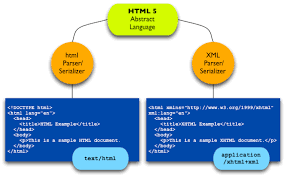
HTML 5 ( HyperText Markup Language Version 5 ) is the next major revision of the core language of the World Wide Web, HTML. HTML 5 is said to become a game-changer in Web application development, one that might even make obsolete such plug-in-based rich Internet application (RIA) technologies as Adobe Flash, Microsoft Silverlight, and Sun JavaFX. HTML5 specifies two variants of the same language, a "classic" HTML ( text/html ) variant known as HTML 5 and an XHTML variant known as XHTML 5. This is the first time that HTML and XHTML have been developed in parallel.

Let's make the web faster

We are excited to discuss what we've learned about web performance with the Internet community. However, to optimize the speed of web applications and make browsing the web as fast as turning the pages of a magazine, we need to work together as a community, to tackle some larger challenges that keep the web slow and prevent it from delivering its full potential: ...

Saturday, May 2, 2009

Wolfram Alpha: An invention that could change the internet for ever

The biggest internet revolution for a generation will be unveiled this month with the launch of software that will understand questions and give specific, tailored answers in a way that the web has never managed before.

The new system, Wolfram Alpha, showcased at Harvard University in the US last week, takes the first step towards what many consider to be the internet's Holy Grail – a global store of information that understands and responds to ordinary language in the same way a person does.

Although the system is still new, it has already produced massive interest and excitement among technology pundits and internet watchers. Computer experts believe the new search engine will be an evolutionary leap in the development of the internet. Nova Spivack, an internet and computer expert, said that Wolfram Alpha could prove just as important as Google. "It is really impressive and significant," he wrote. "In fact it may be as important for the web (and the world) as Google, but for a different purpose.

The real innovation, however, is in its ability to work things out "on the fly", according to its British inventor, Dr Stephen Wolfram:

  • If you ask it to compare the height of Mount Everest to the length of the Golden Gate Bridge, it will tell you.
  • Or ask what the weather was like in London on the day John F Kennedy was assassinated, it will cross-check and provide the answer.
  • Ask it about D sharp major, it will play the scale.
  • Type in "10 flips for four heads" and it will guess that you need to know the probability of coin-tossing.
  • If you want to know when the next solar eclipse over Chicago is, or the exact current location of the International Space Station, it can work it out.

Friday, March 20, 2009

Visual Trace Route Tool

The visual trace route tool displays the path Internet packets traverse to reach a specified destination. A proxy trace (the default) maps the route across the network from your computer, to yougetsignal.com, to the URL you specify. A host trace is typically quicker - it simply maps the network route from yougetsignal.com (hosted at a central location by DreamHost) to the URL you specify. The tool works by identifying the IP addresses of each hop along the way to the destination network address. The estimated geophysical location of each hop is identified using MaxMind's GeoIP database. After all of the hops locations' are identified, the path to the destination is plotted on a Google Map.

Who Protects The Internet ?

For the past five years, John Rennie has braved the towering waves of the North Atlantic Ocean to keep your e-mail coming to you. As chief submersible engineer aboard the Wave Sentinel, part of the fleet operated by U.K.-based undersea installation and maintenance firm Global Marine Systems, Rennie--a congenial, 6'4", 57-year-old Scotsman--patrols the seas, dispatching a remotely operated submarine deep below the surface to repair undersea cables. The cables, thick as fire hoses and packed with fiber optics, run everywhere along the seafloor, ferrying phone and Web traffic from continent to continent at the speed of light.

Friday, March 13, 2009

Web's inventor (Tim Berners-Lee) gets a knighthood

The inventor of the world wide web, Tim Berners-Lee, has been awarded a knighthood for his pioneering work. Dubbed the "Father of the Web", he came up with a system over 10 years ago to organise, link and browse net pages. The famously modest man said he was "quite an ordinary person", and although it felt strange, he was "honoured". Sir Tim was recently reunited with the machine he used to invent the web when he e-mailed 80 schools from the UN's summit on the information society.

It was 20 years ago today: The Web (March 13, 2009)

Is it already 20 years since Tim Berners-Lee authored "Information Management: A proposal" and set the technology world on fire? Back in 1989, Berners-Lee was a software consultant working at the European Organization for Nuclear Research outside of Geneva, Switzerland. On March 13 of that year, he submitted a plan to management on how to better monitor the flow of research at the labs. People were coming and going at such a clip that an increasingly frustrated Berners-Lee complained that CERN was losing track of valuable project information because of the rapid turnover of personnel. It did not help matters that the place was chockablock with incompatible computers people brought with them to the office.

Wednesday, March 11, 2009

French police: we saved millions of euros by adopting Ubuntu

France's Gendarmerie Nationale, the country's national police force, says it has saved millions of dollars by migrating its desktop software infrastructure away from Microsoft Windows and replacing it with the Ubuntu Linux distribution.

The Gendarmerie began its transition to open source software in 2005 when it replaced Microsoft Office with OpenOffice.org across the entire organization. It gradually adopted other open source software applications, including Firefox and Thunderbird. After the launch of Windows Vista in 2006, it decided to phase out Windows and incrementally migrate to Ubuntu.

Tuesday, March 10, 2009

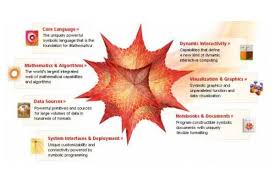
How’s “Wolfram Alpha” different from Google and other search engines?

According to Stephen Wolfram, Wolfram Alpha search engine will be different from Google and other search engines. Wolfram Alpha will offer exact answer, instead of showing up the links to pages that may (or may not) contain the answer, like Google and other search engines. It'll be like typing a question and getting the right answer.

... Wolfram Alpha actually computes the answers to a wide range of questions -- like questions that have factual answers such as "What country is Timbuktu in?" or "How many protons are in a hydrogen atom?" or "What is the average rainfall in Seattle this month?," "What is the 300th digit of Pi?," "where is the ISS?" or "When was GOOG worth more than $300?"