In the contemporary global scenario, the working of the complex and multidimensional factors on the time behaviour of financial series necessitates an investigation of the underlying characteristic features of the same. In addition to the state of the art econometric approaches, analysis in terms of state space dynamics considering the financial time series as deterministic chaos has emerged to be of utmost importance. Understanding the dynamics of a financial series, as a stock market index or a commodity market index is still however, a complex task having its specific requirements. Market behaviour, in case of both commodity and securities is ultimately reflected by the average trading price movement . Thus the time series representing the indices in the respective markets is a key to understanding the economic similarities/dissimilarities in the two markets. Our purpose was to analyse the time series representing the indices of commodity and stock markets .
Showing posts with label statistics. Show all posts
Showing posts with label statistics. Show all posts
Friday, May 21, 2010


Friday, October 30, 2009
EconoPhysics (On offer: laws of nature)

In yesterday's post I asked why economics doesn't have a few laws of nature that could prevent people from basing decisions on the financial equivalent of a perpetual motion machine. Enter the econophysicists, academics, ( usually physicists delving outside the field and not economists borrowing from physics ), who want to apply the rigorous mathematical methods of physics to understanding the economy. By modeling the economy as a collection of minor actors, like the molecules of gas,
they hope to uncover how individual actions give rise to the emergent, large-scale phenomena that have sweeping effects—the booms and busts that take us by surprise.
Tuesday, October 20, 2009
Stephen Wolfram: The Man Who Cracked The Code to Everything ...
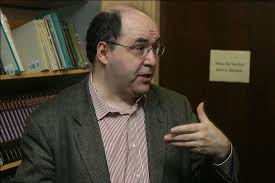
..."The climax of the book is the principle of computational equivalence, which may as well be called "Wolfram's law." After hundreds of pages of laying groundwork, presenting case after case of visual examples where simple rules generate counterintuitively complex results, Wolfram concludes that this phenomenon is overwhelmingly commonplace - it's at the base of everything from morphology to traffic jams. Then he goes further, stating that once a system achieves a certain, easily attainable degree of complexity, it's reached the point of maximum complexity, as measured by the computation required to crank out the end result. Everything at that level of complexity - and that means almost everything you can think of, from human thought to rain hitting pavement - is exactly as complex as anything else."...
Wednesday, September 16, 2009
First images of a carbon atom's electron clouds

The images were captured by Igor Mikhailovskij 's team at the
Kharkov Institute of Physics and Technology, Ukraine.
Friday, September 11, 2009
The uncalculability of electron systems
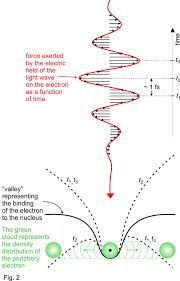
The electric and magnetic properties of solids are impossible to calculate exactly: The complex interactions of the many electrons which underly these phenomena cannot be computed even by the most powerful classical computers. Here, the central task is to determine the ground state of the electrons moving in the field of the positively charged nuclei. The most widely used method for treating such systems is Density Functional Theory, which reduces the many-body problem to a single particle interaction. As Dr. Norbert Schuch, scientist in the theory division of Prof. Ignacio Cirac at the Max Planck Institute of Quantum Optics in Garching, and Prof. Frank Verstraete from the University of Vienna, report in Nature Physics
( DOI: 10.1038/NPHYS1370 ), there exist however fundamental limitations to the applicability of this theory. The scientists succeeded by using methods developed in Quantum Information Theory, demonstrating that these methods can give deep insights beyond the development of quantum computers.
Friday, July 17, 2009
World's tiniest lamp spans quantum and classical physics

The smallest ever incandescent lamp, made using a single carbon nanotube, has been created by physicists in the US. At 1.4 micrometres long and just 13 nanometres wide, the filament is invisible to the naked eye until it is switched on.
Chris Regan's team at the University of California, Los Angeles attached a palladium and gold electrode to each end of the carbon nanotube, which spans a tiny hole in a silicon chip and is held in a vacuum.
When electricity runs along the nanotube it heats up and begins to glow, releasing millions of photons every second, of which a few thousand reach the eye. "That makes the light relatively easy to see," says Regan. "Your eye is nearly single-photon sensitive." But it would make a poor reading lamp, he joke
Tuesday, June 30, 2009
Quantum mechanical evolution towards thermal equilibrium
The circumstances under which a system reaches thermal equilibrium, and how to derive this from basic dynamical laws, has been a major question from the very beginning of thermodynamics and statistical mechanics.
Despite considerable progress, it remains an open problem.
Motivated by this issue, we address the more general question of equilibration. We prove, with virtually full generality, that reaching equilibrium is a universal property of quantum systems: almost any subsystem in interaction with a large enough bath will reach an equilibrium state and remain close to it for almost all times. We also prove several general results about other aspects of thermalization besides equilibration, for example, that the equilibrium state does not depend on the detailed microstate of the bath.How to Avoid Yourself

Every Sunday morning you go for a walk in the city, heading nowhere in particular, with just one rule to your rambling: You never retrace your steps or cross your own path. If you have already walked along a certain block or passed through an intersection, you refuse to set foot there again.
This recipe for tracing a loopless path through a grid of city streets leads into some surprisingly dark back alleys of mathematics—not to mention byways of physics, chemistry, computer science and biology. Avoiding yourself, it turns out, is a hard problem. The exact analysis of self-avoiding walks has stumped mathematicians for half a century; even counting the walks is a challenge.
My own initiation into the trials of self-avoidance came when I began experimenting with a simple model of the folding of protein molecules, a story I told in an earlier "Computing Science" column (see Hayes 1998). Protein folding is close to the historical roots of the self-avoiding walk, which was first conceived as a tool for understanding the geometry of long-chain polymer molecules. A polymer writhing and wriggling in solution forms a random tangle—random, that is, except that no two atoms can occupy the same position at the same time. This "excluded volume effect" in the polymer is modeled by the walk's insistence on avoiding itself.
Sunday, June 21, 2009
Fuzzy Math

Have the votes for president been properly counted in Florida ?. On the surface, that's a question of simple math. But beneath the number crunching, Republicans and Democrats are waging a war of disguised biases. When data don't turn out the way your theory predicts, should you question the theory or the data ?. When a new vote tally contradicts an old one, should you distrust the first count or the second ?. When one kind of recount is more evenhanded but another is more comprehensive, which is better ?. These dilemmas form the hidden crux of the debate over whether to recount Florida's ballots by hand, as Democrats prefer, or to rely on a machine recount, as Republicans prefer. The two parties aren't being candid about these questions. And math won't answer them.
Guilt by Calculation
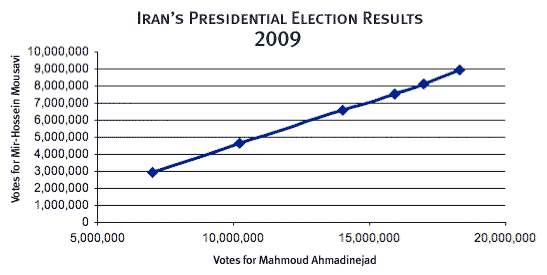
This kind of statistical gumshoeing has a long history. In 1936, for example, English biologist and statistician R. A. Fisher went gunning for Gregor Mendel, whose experimental results Fisher believed had been tweaked to be more favorable to Mendel's ideas. "Fictitious data can seldom survive a careful scrutiny," Fisher wrote, "and, since most men underestimate the frequency of large deviations arising by chance, such data may be expected generally to agree more closely with expectation than genuine data would." In other words, it was precisely the beautiful agreement of experiment with theory that exposed Mendel's thumb on the scale. Only once in 15,000 times, Fisher computed, could one expect such strong conformity. ( The controversy over Mendel's research practices continues to this day, with notable scientists lining up on both men's sides ).
Subscribe to:
Posts (Atom)