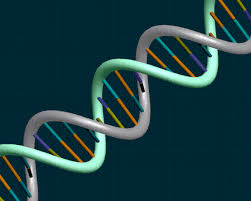
The images were captured by Igor Mikhailovskij 's team at the
Kharkov Institute of Physics and Technology, Ukraine.


Starting with Firefox 3.5, you can embed a video in a web page like an image.
This means video is now a part of the document, and finally, a first class citizen of the Open Web. Like all other elements, you can use it with CSS and JavaScript. Let’s see what this all means …
Son muchos los problemas que continúan teniendo nuestras publicaciones para competir internacionalmente
, dice el autor.
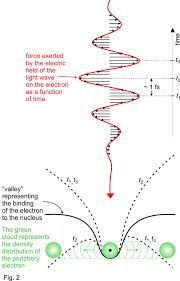

The laws of physics, which describe everything from electricity to moving objects to energy conservation, are time-invariant. That is, the laws still hold if time is reversed. However, this time reversal symmetry is in direct contrast with everyday phenomena, where it’s obvious that time moves forward and not backward .

IBM scientists have imaged the chemical structure of an individual molecule, increasing the possibility for creating electronic building blocks on the atomic and molecular scale.


El agujero negro más lejano que se conoce, un objeto supermasivo situado a 12.800 millones de años luz de la Tierra, tiene alrededor una galaxia tan grande como nuestra Vía Láctea, algo sorprendente en el universo primitivo tan joven ( sólo 840 millones de años después del Big Bang ), dicen los científicos. La galaxia y el agujero negro, que tiene al menos mil millones de veces más materia que el Sol, debieron formarse muy rápidamente en el cosmos primitivo
, dice Tomotsugu Goto ( Universidad de Hawai ), líder de esta investigación, en la que participan, además, cuatro astrofísicos de instituciones japonesas. De hecho, las observaciones se realizaron en agosto del año pasado con el gran telescopio nipón Subaru, ubicado en el observatorio de Mauna Kea ( Hawai ), sobre todo para probar un nuevo sensor ( CCD ) avanzado instalado en una de sus cámaras.
| El poeta venezolano recibirá el reconocimiento dotado con 150 mil dólares que busca destacar al autor que haya aportado una valiosa obra de creación, en cualquier género literario |
 |
Cadenas, quien recibirá el galardón dotado con 150 mil dólares en el marco de la Feria Internacional del Libro de Guadalajara, el 28 de noviembre próximo, manifestó que tiene muchas cosas que agradecerle a México y dijo estar muy contento con el Premio.
Autor de una obra marcada por una continua meditación sobre la relación entre ética, lenguaje y poesía, el escritor sudamericano nacido en Barquisimeto en 1930, aseguró en entrevista, desde Caracas, que lo que brota ahora en mí es la palabra gracias
.
Cadenas también habló de su relación con México y sus autores y recordó que su obra completa está publicada en el Fondo de Cultura Económica, que este día se sumó a las felicitaciones para este autor.
El acta del jurado, que fue leída por Gustavo Guerrero, destacó a Cadenas como una de las voces más reconocidas de la poesía latinoamericana contemporánea
.
Señaló que su obra encarna hoy para los más jóvenes el horizonte de una palabra que se aleja del lirismo tradicional y trae consigo el imperativo de darle voz a aquello que, de otro modo, ya no encuentra espacios para decirse en nuestra época
.
Dotado con 150 mil dólares y convocado por la Asociación Civil del Premio de Literatura Latinoamericana y del Caribe Juan Rulfo, el Premio FIL de Literatura en Lenguas Romances busca reconocer a un escritor que haya aportado una valiosa obra de creación, en cualquier género literario.


Complex Adaptive Systems and the Threshold Effect: Views from the Natural and Social Sciences
Most interesting phenomena in natural and social systems include constant transitions and oscillations among their various phases. Wars, companies, societies, markets, and humans rarely stay in a stable, predictable state for long. Randomness, power laws, and human behavior ensure that the future is both unknown and challenging. How do events unfold ? When do they take hold ? Why do some initial events cause an avalanche while others do not ? What characterizes these events ? What are the thresholds that differentiate a sea change from a non-event ?
Complex Adaptive Systems have proven to be a powerful tool for exploring these and other related phenomena. We characterize a general CAS model as having a large number of self-similar agents that:
Advances in modeling and computing technology have led not only to a deeper understanding of complex systems in many areas, but they have also raised the possibility that similar fundamental principles may be at work across these systems, even though the underlying principles may manifest themselves differently.

The Shanghai Composite Index was supposed to burst before July 27 but didn't. A few days after that deadline, however, it dropped by 20 percent. Coincidence ?.
Last month, we looked at a prediction that the Shanghai Composite stock market index was about to crash. The forecast was made by a team lead by the econophysicist Didier Sornette at the Swiss Federal Institute of Technology in Zurich, who has made a study of economic bubbles and how they burst. His thinking is that bubbles are the result of some kind of feedback mechanism that creates faster-than-exponential growth. This kind of growth rate is straightforward to measure, and so bubbles should be easy to identify. In July, he and his buddies pointed out that the Shanghai Composite stock market index was following exactly this kind of trend. But they also made an extraordinary prediction. They said that this bubble would burst between July 17 and 27.
 Low concentrations of triangular DNA origami bind to wide lines on a lithographically patterned surface. Credit: PRNewsFoto/IBM.
The cost involved in shrinking (chip) features to improve performance is a limiting factor in keeping pace with Moore's Law and a concern across the semiconductor industry,said Spike Narayan, a manager in the Science & Technology division of IBM Research, in a statement. Moore's Law, named after Intel co-founder Gordon Moore, states that the number of transistors that can be placed on an integrated circuit doubles roughly every two years. For more than four decades, chip manufacturers have been able to consistently shrink chip geometries, allowing Moore's Law to remain on track.

Like any phase transition, the change of the Hall conductance between quantized values ( as the electrons are moved between Landau levels by an external voltage or magnetic field ) can be described by a critical exponent, ν. Both numerical calculations and experiment agree fairly well about the value of ν.
But as Keith Slevin at Osaka University and Tomi Ohtsuki at Sophia University, both in Japan, argue in a Rapid Communication appearing in Physical Review B, this may be because of a coincidence of errors. Namely, numerical calculations have so far ignored Coulomb interactions between electrons, which should in fact be important, while the experimentally measured value of ν is based on approximations.


Para el primer día del evento ( 2/11/09 ) se ha programado una jornada en la Fundación IDEA ( Caracas, Venezuela ) en la cual varios investigadores presentarán los desarrollos obtenidos fruto de la cooperación franco-venezolana en nanociencia y nanotecnología, gracias al apoyo de las herramientas de cooperación científica entre estos dos países.
El Comité Organizador de la ENANO2009 también ha programado sesiones de cursos, charlas y carteles del 3 al 6 de noviembre de 2009. Esta segunda parte de la Escuela tendrá lugar en Choroní, Edo. Aragua. Las sesiones van dirigidas a estudiantes e investigadores sensibles al desarrollo de estos conocimientos en Venezuela.
Se programarán además mesas de trabajo sobre aspectos asociados al programa de doctorado interinstitucional de nanotecnología que la Red se encuentra promoviendo, la cooperación nacional e internacional en actividades de I+D+i dirigidas a atender los problemas de interés nacional, la definición de mecanismos que faciliten la comunicación entre el sector científico, productivo y la sociedad en general.

See the original Keldysh's papers: