Tuesday, June 23, 2009

W3C: Web Storage

This specification defines two APIs for persistent data storage in Web clients: one for accessing key-value pair data and another for accessing structured data.
HTML 5

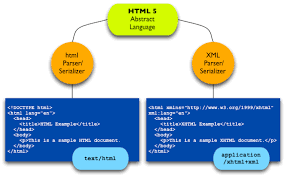
HTML 5 ( HyperText Markup Language Version 5 ) is the next major revision of the core language of the World Wide Web, HTML. HTML 5 is said to become a game-changer in Web application development, one that might even make obsolete such plug-in-based rich Internet application (RIA) technologies as Adobe Flash, Microsoft Silverlight, and Sun JavaFX. HTML5 specifies two variants of the same language, a "classic" HTML ( text/html ) variant known as HTML 5 and an XHTML variant known as XHTML 5. This is the first time that HTML and XHTML have been developed in parallel.


Let's make the web faster

We are excited to discuss what we've learned about web performance with the Internet community. However, to optimize the speed of web applications and make browsing the web as fast as turning the pages of a magazine, we need to work together as a community, to tackle some larger challenges that keep the web slow and prevent it from delivering its full potential: ...

Sunday, June 21, 2009

Fuzzy Math

Have the votes for president been properly counted in Florida ?. On the surface, that's a question of simple math. But beneath the number crunching, Republicans and Democrats are waging a war of disguised biases. When data don't turn out the way your theory predicts, should you question the theory or the data ?. When a new vote tally contradicts an old one, should you distrust the first count or the second ?. When one kind of recount is more evenhanded but another is more comprehensive, which is better ?. These dilemmas form the hidden crux of the debate over whether to recount Florida's ballots by hand, as Democrats prefer, or to rely on a machine recount, as Republicans prefer. The two parties aren't being candid about these questions. And math won't answer them.

Guilt by Calculation

This kind of statistical gumshoeing has a long history. In 1936, for example, English biologist and statistician R. A. Fisher went gunning for Gregor Mendel, whose experimental results Fisher believed had been tweaked to be more favorable to Mendel's ideas. "Fictitious data can seldom survive a careful scrutiny," Fisher wrote, "and, since most men underestimate the frequency of large deviations arising by chance, such data may be expected generally to agree more closely with expectation than genuine data would." In other words, it was precisely the beautiful agreement of experiment with theory that exposed Mendel's thumb on the scale. Only once in 15,000 times, Fisher computed, could one expect such strong conformity. ( The controversy over Mendel's research practices continues to this day, with notable scientists lining up on both men's sides ).

Wednesday, June 17, 2009

AWT and mechanical models of entanglement

By AWT explanation of quantum entanglement is closely related to wave function collapse. Try to imagine, you're a sailor, who is staying at night on the end of floating wharf, to which some boat is attached. Because night sea is stormy, everything ( both sailor, wharf and boat ) are wobbling up and down, but in different phases. From the perspective of sailor this boat sways randomly. The observation of quantum particle is analogous to situation, when sailor touches the boat for a moment, thus exchanging some kinetic energy with it. What will happen, after then ?

Evidence found of lake, catastrophic flood on Mars

Geologists at the Smithsonian's National Air and Space Museum have discovered a large former lake in the highlands of Mars that would cover an area the size of Texas and New Mexico combined, and which overflowed to carve one of that planet's largest valleys. The findings appear in the June 21 issue of the journal Science.

Monday, June 15, 2009

Tunable few-electron double quantum dots and Klein tunnelling in ultraclean carbon nanotubes

Quantum dots defined in carbon nanotubes are a platform for both basic scientific studies and research into new device applications. In particular, they have unique properties that make them attractive for studying the coherent properties of single-electron spins. To perform such experiments it is necessary to confine a single electron in a quantum dot with highly tunable barriers, but disorder has prevented tunable nanotube-based quantum-dot devices from reaching the single-electron regime. Here, we use local gate voltages applied to an ultraclean suspended nanotube to confine a single electron in both a single quantum dot and, for the first time, in a tunable double quantum dot. This tunability is limited by a novel type of tunnelling that is analogous to the tunnelling in the Klein paradox of relativistic quantum mechanics.

Thursday, June 4, 2009

Single-electron transistors

While the electronics industry wonders what will happen when transistors become so small that quantum effects become important, researchers are building new transistors that actively exploit the quantum properties of electrons. Michel Devoret and Christian Glattli report.

THE INVENTION of the transistor by John Bardeen and William Shockley in 1948 triggered a new era in electronics. Originally designed simply to emulate the vacuum tube, scientists soon found that this solid-state device could offer much more. The great potential of the transistor for speed, miniaturization and reliability has been fully exploited since well controlled materials such as pure single-crystal silicon became available. According to the latest "road-map" for the microelectronics industry, microchips containing one billion transistors and operating with a clock cycle of a billionth of a second will be on the market just a few years into the new millennium...

Wednesday, June 3, 2009

Time Travel Beats Quantum Mechanics

The ability to travel back in time, though entirely hypothetical, isn't explicitly forbidden by our current understanding of space and time, embodied in the general theory of relativity. Time travel tends to play havoc with other laws of physics, however, and in the 29 May Physical Review Letters researchers report another example. They show that data encryption systems relying on quantum principles can be broken by allowing the data stream to interact with a quantum state that travels back in time. This scenario doesn't present an immediate threat to information security, the authors assert. Rather, it's an example of the kind of contradiction that any unified theory of quantum mechanics and gravity will have to resolve.

Miles V. Klein: Shining light on iron pnictides with Raman scattering

Our theoretical understanding of “classic” one-band superconductors such as simple metals is based on the BCS theory, which says that at low temperatures the minimum excitation energy of a single electron ( or the energy required to break a Cooper pair ) is twice Î”, the superconducting gap. As first shown by Abrikosov and collaborators this is seen in the electronic Raman scattering spectrum, an inelastic light scattering probe, as a continuum that sharply rises from zero at energy shift 2Δ, followed by a fall off at higher energy...

Tuesday, June 2, 2009

Dambisa Moyo

Dambisa Moyo was born and raised in Zambia, Southern Africa. She completed a PhD in Economics at Oxford University and holds a Masters from Harvard University. She completed a Bachelors degree in Chemistry and MBA in Finance at the American University in Washington D.C...

...This book ( How the West Was Lost, scheduled for publication with Penguin and Farrar, Straus & Giroux in 2010 ) examines the policy errors made in the US and other Western economies which culminated in the 2008 financial crisis. And discusses why financial and economic experts missed the signs of the credit crunch. It also explores the policy decisions that have placed the emerging world- China, Russia and the Middle East, in pole position to become the dominant economic players in the 21st century.

Felix Ritort: Fluctuations in open systems

Fluctuation theorems (FTs) establish fundamental identities about energy exchanges between a nonequilibrium system and its environment. Interest in such relations has been boosted by the possibility of applying perturbations to mesoscopic systems undergoing irreversible processes. While most recent research focused on classical systems, in a paper in Physical Review Letters, Michele Campisi, Peter Talkner, and Peter Hänggi ( Phys. Rev. Lett. 102, 210401 (2009) ), at the University of Augsburg in Germany, have now extended FTs to open quantum systems, paving the way for further progress in scenarios ranging from Bose-Einstein condensates to metallic nanowires.

Monday, June 1, 2009

The World Digital Library (WDL)

The World Digital Library (WDL) makes available on the Internet, free of charge and in multilingual format, significant primary materials from countries and cultures around the world. The principal objectives of the WDL are to:

Promote international and intercultural understanding;

Expand the volume and variety of cultural content on the Internet;

Provide resources for educators, scholars, and general audiences;

Build capacity in partner institutions to narrow the digital divide within and between countries.

Monday, May 4, 2009

Palabras del Presidente de la República de Costa Rica Óscar Arias en la Cumbre de las Américas ( 18 de abril del 2009 )

Trinidad y Tobago: 18 de abril del 2009

Tengo la impresión de que cada vez que los países caribeños y latinoamericanos se reúnen con el presidente de los Estados Unidos de América, es para pedirle cosas o para reclamarle cosas. Casi siempre, es para culpar a Estados Unidos de nuestros males pasados, presentes y futuros. No creo que eso sea del todo justo.

No podemos olvidar que América Latina tuvo universidades antes de que Estados Unidos creara Harvard y William & Mary, que son las primeras universidades de ese país. No podemos olvidar que en este continente, como en el mundo entero, por lo menos hasta 1750 todos los americanos eran más o menos iguales: todos eran pobres.

Cuando aparece la Revolución Industrial en Inglaterra, otros países se montan en ese vagón: Alemania, Francia, Estados Unidos, Canadá, Australia, Nueva Zelanda… y así la Revolución Industrial pasó por América Latina como un cometa, y no nos dimos cuenta. Ciertamente perdimos la oportunidad.

También hay una diferencia muy grande. Leyendo la historia de América Latina, comparada con la historia de Estados Unidos, uno comprende que Latinoamérica no tuvo un John Winthrop español, ni portugués, que viniera con la Biblia en su mano dispuesto a construir una Ciudad sobre una Colina, una ciudad que brillara, como fue la pretensión de los peregrinos que llegaron a Estados Unidos.

Hace 50 años, México era más rico que Portugal. En 1950, un país como Brasil tenía un ingreso per cápita más elevado que el de Corea del Sur. Hace 60 años, Honduras tenía más riqueza per cápita que Singapur, y hoy Singapur –en cuestión de 35 ó 40 años– es un país con $40.000 de ingreso anual por habitante. Bueno, algo hicimos mal los latinoamericanos.

¿ Qué hicimos mal ?. No puedo enumerar todas las cosas que hemos hecho mal. Para comenzar, tenemos una escolaridad de 7 años. Esa es la escolaridad promedio de América Latina y no es el caso de la mayoría de los países asiáticos. Ciertamente no es el caso de países como Estados Unidos y Canadá, con la mejor educación del mundo, similar a la de los europeos. De cada 10 estudiantes que ingresan a la secundaria en América Latina, en algunos países solo uno termina esa secundaria. Hay países que tienen una mortalidad infantil de 50 niños por cada mil, cuando el promedio en los países asiáticos más avanzados es de 8, 9 ó 10.

Nosotros tenemos países donde la carga tributaria es del 12% del producto interno bruto, y no es responsabilidad de nadie, excepto la nuestra, que no le cobremos dinero a la gente más rica de nuestros países. Nadie tiene la culpa de eso, excepto nosotros mismos. En 1950, cada ciudadano norteamericano era cuatro veces más rico que un ciudadano latinoamericano. Hoy en día, un ciudadano norteamericano es 10, 15 ó 20 veces más rico que un latinoamericano. Eso no es culpa de Estados Unidos, es culpa nuestra.

En mi intervención de esta mañana, me referí a un hecho que para mí es grotesco, y que lo único que demuestra es que el sistema de valores del siglo XX, que parece ser el que estamos poniendo en práctica también en el siglo XXI, es un sistema de valores equivocado. Porque no puede ser que el mundo rico dedique 100.000 millones de dólares para aliviar la pobreza del 80% de la población del mundo –en un planeta que tiene 2.500 millones de seres humanos con un ingreso de $2 por día– y que gaste 13 veces más ( $1.300.000.000.000 ) en armas y soldados.

Como lo dije esta mañana, no puede ser que América Latina se gaste $50.000 millones en armas y soldados. Yo me pregunto: ¿ Quién es el enemigo nuestro ?. El enemigo nuestro, presidente Correa, de esa desigualdad que usted apunta con mucha razón, es la falta de educación; es el analfabetismo; es que no gastamos en la salud de nuestro pueblo; que no creamos la infraestructura necesaria, los caminos, las carreteras, los puertos, los aeropuertos; que no estamos dedicando los recursos necesarios para detener la degradación del medio ambiente; es la desigualdad que tenemos, que realmente nos avergüenza; es producto, entre muchas cosas, por supuesto, de que no estamos educando a nuestros hijos y a nuestras hijas.

Uno va a una universidad latinoamericana y todavía parece que estamos en los sesenta, setenta u ochenta.

Parece que se nos olvidó que el 9 de noviembre de 1989 pasó algo muy importante, al caer el Muro de Berlín, y que el mundo cambió. Tenemos que aceptar que este es un mundo distinto, y en eso francamente pienso que todos los académicos, que toda la gente de pensamiento, que todos los economistas, que todos los historiadores, casi que coinciden en que el siglo XXI es el siglo de los asiáticos, no de los latinoamericanos. Y yo, lamentablemente, coincido con ellos. Porque mientras nosotros seguimos discutiendo sobre ideologías, seguimos discutiendo sobre todos los ismos ¿ cuál es el mejor ? capitalismo, socialismo, comunismo, liberalismo, neoliberalismo, socialcristianismo...), los asiáticos encontraron un “ismo” muy realista para el siglo XXI y el final del siglo XX, que es el pragmatismo.

Para solo citar un ejemplo, recordemos que cuando Deng Xiaoping visitó Singapur y Corea del Sur, después de haberse dado cuenta de que sus propios vecinos se estaban enriqueciendo de una manera muy acelerada, regresó a Pekín y dijo a los viejos camaradas maoístas que lo habían acompañado en la Larga Marcha: Bueno, la verdad, queridos camaradas, es que mí no me importa si el gato es blanco o negro, lo único que me interesa es que cace ratones. Y si hubiera estado vivo Mao, se hubiera muerto de nuevo cuando dijo que “ la verdad es que enriquecerse es glorioso ”. Y mientras los chinos hacen esto, y desde el 79 a hoy crecen a un 11%, 12% o 13%, y han sacado a 300 millones de habitantes de la pobreza, nosotros seguimos discutiendo sobre ideologías que tuvimos que haber enterrado hace mucho tiempo atrás.

La buena noticia es que esto lo logró Deng Xioping cuando tenía 74 años. Viendo alrededor, queridos Presidentes, no veo a nadie que esté cerca de los 74 años. Por eso solo les pido que no esperemos a cumplirlos para hacer los cambios que tenemos que hacer.

Muchas gracias.
Saturday, May 2, 2009

Wolfram Alpha: An invention that could change the internet for ever

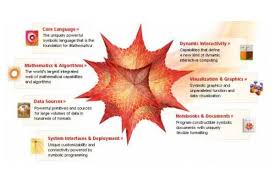
The biggest internet revolution for a generation will be unveiled this month with the launch of software that will understand questions and give specific, tailored answers in a way that the web has never managed before.

The new system, Wolfram Alpha, showcased at Harvard University in the US last week, takes the first step towards what many consider to be the internet's Holy Grail – a global store of information that understands and responds to ordinary language in the same way a person does.

Although the system is still new, it has already produced massive interest and excitement among technology pundits and internet watchers. Computer experts believe the new search engine will be an evolutionary leap in the development of the internet. Nova Spivack, an internet and computer expert, said that Wolfram Alpha could prove just as important as Google. "It is really impressive and significant," he wrote. "In fact it may be as important for the web (and the world) as Google, but for a different purpose.

The real innovation, however, is in its ability to work things out "on the fly", according to its British inventor, Dr Stephen Wolfram:

  • If you ask it to compare the height of Mount Everest to the length of the Golden Gate Bridge, it will tell you.
  • Or ask what the weather was like in London on the day John F Kennedy was assassinated, it will cross-check and provide the answer.
  • Ask it about D sharp major, it will play the scale.
  • Type in "10 flips for four heads" and it will guess that you need to know the probability of coin-tossing.
  • If you want to know when the next solar eclipse over Chicago is, or the exact current location of the International Space Station, it can work it out.

Tuesday, April 28, 2009

Pauling’s dreams for graphene

Graphene research is probably one of the fastest growing fields in condensed matter physics.
  1. The material is one atom thick, albeit it can be seen with an ordinary optical microscope.
  2. It has the properties of a good metal, although its electronic properties do not fit the standard theory of metals because its electrons propagate as massless Dirac particles.
  3. Graphene is also resistant against extrinsic impurities because its chemical bonding is very specific and consequently graphene conducts electricity better, with less energy loss, than silicon (the platform of all modern electronics).
  4. Moreover, graphene is one of the strongest materials ever measured in terms of Young’s modulus and elastic stiffness (the only other material that is comparable in strength is diamond), nevertheless it is one of softest (the only example of a metallic membrane).
  5. It can be used as an ultrasensitive nano-mechanical resonator besides being highly impermeable. Hence it is not surprising that so many high-tech industries are interested in developing graphene-based devices for a plethora of applications, from high-frequency transistors to reversible hydrogen storage.

Is a room-temperature, solid-state quantum computer mere fantasy ?

Creating a practical solid-state quantum computer is seriously hard. Getting such a computer to operate at room temperature is even more challenging. Is such a quantum computer possible at all ?. If so, which schemes might have a chance of success ?

The TRUTH about all those dodgy health claims, by one of Britain's top researchers

Now, Professor Regan is applying her trademark scientific training to examine the health credentials of an even wider range of products for her latest BBC2 series. And not only has she discovered some bestsellers have little evidence backing them up, she believes many companies are, in fact, touting spurious claims. Here, she shares a few of her intriguing findings...

To prove this point, I developed my own diet pill and asked 17 overweight people to try it for a month, alongside a balanced diet and a sensible exercise plan. More than 70 per cent of the volunteers lost weight and believed the tablets had worked. Unbeknown to them, though, the tablets were simply sugar, a placebo - which shows the power of mind over matter. Yet I could easily use my results to launch an impressive marketing campaign, - as many companies do.
Saturday, April 25, 2009

More Is Difficult

I've remarked several times that I think condensed matter physics gets slighted in public discussions of the field, especially relative to its usefulness. Particle physics gets all sorts of press, but in practical terms, it is essentially useless-- whether CERN or Fermilab locate the Higgs boson or not will make absolutely no difference in the lives of the average person. Condensed matter physics, on the other hand gets basically no press, despite the fact that modern technological civilization would be impossible without an understanding of condensed matter physics.