Tuesday, June 2, 2009

Felix Ritort: Fluctuations in open systems

Fluctuation theorems (FTs) establish fundamental identities about energy exchanges between a nonequilibrium system and its environment. Interest in such relations has been boosted by the possibility of applying perturbations to mesoscopic systems undergoing irreversible processes. While most recent research focused on classical systems, in a paper in Physical Review Letters, Michele Campisi, Peter Talkner, and Peter Hänggi ( Phys. Rev. Lett. 102, 210401 (2009) ), at the University of Augsburg in Germany, have now extended FTs to open quantum systems, paving the way for further progress in scenarios ranging from Bose-Einstein condensates to metallic nanowires.

Monday, June 1, 2009

The World Digital Library (WDL)

The World Digital Library (WDL) makes available on the Internet, free of charge and in multilingual format, significant primary materials from countries and cultures around the world. The principal objectives of the WDL are to:

Promote international and intercultural understanding;

Expand the volume and variety of cultural content on the Internet;

Provide resources for educators, scholars, and general audiences;

Build capacity in partner institutions to narrow the digital divide within and between countries.

Monday, May 4, 2009

Palabras del Presidente de la República de Costa Rica Óscar Arias en la Cumbre de las Américas ( 18 de abril del 2009 )

Trinidad y Tobago: 18 de abril del 2009

Tengo la impresión de que cada vez que los países caribeños y latinoamericanos se reúnen con el presidente de los Estados Unidos de América, es para pedirle cosas o para reclamarle cosas. Casi siempre, es para culpar a Estados Unidos de nuestros males pasados, presentes y futuros. No creo que eso sea del todo justo.

No podemos olvidar que América Latina tuvo universidades antes de que Estados Unidos creara Harvard y William & Mary, que son las primeras universidades de ese país. No podemos olvidar que en este continente, como en el mundo entero, por lo menos hasta 1750 todos los americanos eran más o menos iguales: todos eran pobres.

Cuando aparece la Revolución Industrial en Inglaterra, otros países se montan en ese vagón: Alemania, Francia, Estados Unidos, Canadá, Australia, Nueva Zelanda… y así la Revolución Industrial pasó por América Latina como un cometa, y no nos dimos cuenta. Ciertamente perdimos la oportunidad.

También hay una diferencia muy grande. Leyendo la historia de América Latina, comparada con la historia de Estados Unidos, uno comprende que Latinoamérica no tuvo un John Winthrop español, ni portugués, que viniera con la Biblia en su mano dispuesto a construir una Ciudad sobre una Colina, una ciudad que brillara, como fue la pretensión de los peregrinos que llegaron a Estados Unidos.

Hace 50 años, México era más rico que Portugal. En 1950, un país como Brasil tenía un ingreso per cápita más elevado que el de Corea del Sur. Hace 60 años, Honduras tenía más riqueza per cápita que Singapur, y hoy Singapur –en cuestión de 35 ó 40 años– es un país con $40.000 de ingreso anual por habitante. Bueno, algo hicimos mal los latinoamericanos.

¿ Qué hicimos mal ?. No puedo enumerar todas las cosas que hemos hecho mal. Para comenzar, tenemos una escolaridad de 7 años. Esa es la escolaridad promedio de América Latina y no es el caso de la mayoría de los países asiáticos. Ciertamente no es el caso de países como Estados Unidos y Canadá, con la mejor educación del mundo, similar a la de los europeos. De cada 10 estudiantes que ingresan a la secundaria en América Latina, en algunos países solo uno termina esa secundaria. Hay países que tienen una mortalidad infantil de 50 niños por cada mil, cuando el promedio en los países asiáticos más avanzados es de 8, 9 ó 10.

Nosotros tenemos países donde la carga tributaria es del 12% del producto interno bruto, y no es responsabilidad de nadie, excepto la nuestra, que no le cobremos dinero a la gente más rica de nuestros países. Nadie tiene la culpa de eso, excepto nosotros mismos. En 1950, cada ciudadano norteamericano era cuatro veces más rico que un ciudadano latinoamericano. Hoy en día, un ciudadano norteamericano es 10, 15 ó 20 veces más rico que un latinoamericano. Eso no es culpa de Estados Unidos, es culpa nuestra.

En mi intervención de esta mañana, me referí a un hecho que para mí es grotesco, y que lo único que demuestra es que el sistema de valores del siglo XX, que parece ser el que estamos poniendo en práctica también en el siglo XXI, es un sistema de valores equivocado. Porque no puede ser que el mundo rico dedique 100.000 millones de dólares para aliviar la pobreza del 80% de la población del mundo –en un planeta que tiene 2.500 millones de seres humanos con un ingreso de $2 por día– y que gaste 13 veces más ( $1.300.000.000.000 ) en armas y soldados.

Como lo dije esta mañana, no puede ser que América Latina se gaste $50.000 millones en armas y soldados. Yo me pregunto: ¿ Quién es el enemigo nuestro ?. El enemigo nuestro, presidente Correa, de esa desigualdad que usted apunta con mucha razón, es la falta de educación; es el analfabetismo; es que no gastamos en la salud de nuestro pueblo; que no creamos la infraestructura necesaria, los caminos, las carreteras, los puertos, los aeropuertos; que no estamos dedicando los recursos necesarios para detener la degradación del medio ambiente; es la desigualdad que tenemos, que realmente nos avergüenza; es producto, entre muchas cosas, por supuesto, de que no estamos educando a nuestros hijos y a nuestras hijas.

Uno va a una universidad latinoamericana y todavía parece que estamos en los sesenta, setenta u ochenta.

Parece que se nos olvidó que el 9 de noviembre de 1989 pasó algo muy importante, al caer el Muro de Berlín, y que el mundo cambió. Tenemos que aceptar que este es un mundo distinto, y en eso francamente pienso que todos los académicos, que toda la gente de pensamiento, que todos los economistas, que todos los historiadores, casi que coinciden en que el siglo XXI es el siglo de los asiáticos, no de los latinoamericanos. Y yo, lamentablemente, coincido con ellos. Porque mientras nosotros seguimos discutiendo sobre ideologías, seguimos discutiendo sobre todos los ismos ¿ cuál es el mejor ? capitalismo, socialismo, comunismo, liberalismo, neoliberalismo, socialcristianismo...), los asiáticos encontraron un “ismo” muy realista para el siglo XXI y el final del siglo XX, que es el pragmatismo.

Para solo citar un ejemplo, recordemos que cuando Deng Xiaoping visitó Singapur y Corea del Sur, después de haberse dado cuenta de que sus propios vecinos se estaban enriqueciendo de una manera muy acelerada, regresó a Pekín y dijo a los viejos camaradas maoístas que lo habían acompañado en la Larga Marcha: Bueno, la verdad, queridos camaradas, es que mí no me importa si el gato es blanco o negro, lo único que me interesa es que cace ratones. Y si hubiera estado vivo Mao, se hubiera muerto de nuevo cuando dijo que “ la verdad es que enriquecerse es glorioso ”. Y mientras los chinos hacen esto, y desde el 79 a hoy crecen a un 11%, 12% o 13%, y han sacado a 300 millones de habitantes de la pobreza, nosotros seguimos discutiendo sobre ideologías que tuvimos que haber enterrado hace mucho tiempo atrás.

La buena noticia es que esto lo logró Deng Xioping cuando tenía 74 años. Viendo alrededor, queridos Presidentes, no veo a nadie que esté cerca de los 74 años. Por eso solo les pido que no esperemos a cumplirlos para hacer los cambios que tenemos que hacer.

Muchas gracias.

Saturday, May 2, 2009

Wolfram Alpha: An invention that could change the internet for ever

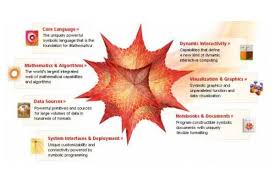
The biggest internet revolution for a generation will be unveiled this month with the launch of software that will understand questions and give specific, tailored answers in a way that the web has never managed before.

The new system, Wolfram Alpha, showcased at Harvard University in the US last week, takes the first step towards what many consider to be the internet's Holy Grail – a global store of information that understands and responds to ordinary language in the same way a person does.

Although the system is still new, it has already produced massive interest and excitement among technology pundits and internet watchers. Computer experts believe the new search engine will be an evolutionary leap in the development of the internet. Nova Spivack, an internet and computer expert, said that Wolfram Alpha could prove just as important as Google. "It is really impressive and significant," he wrote. "In fact it may be as important for the web (and the world) as Google, but for a different purpose.

The real innovation, however, is in its ability to work things out "on the fly", according to its British inventor, Dr Stephen Wolfram:

  • If you ask it to compare the height of Mount Everest to the length of the Golden Gate Bridge, it will tell you.
  • Or ask what the weather was like in London on the day John F Kennedy was assassinated, it will cross-check and provide the answer.
  • Ask it about D sharp major, it will play the scale.
  • Type in "10 flips for four heads" and it will guess that you need to know the probability of coin-tossing.
  • If you want to know when the next solar eclipse over Chicago is, or the exact current location of the International Space Station, it can work it out.

Tuesday, April 28, 2009

Pauling’s dreams for graphene

Graphene research is probably one of the fastest growing fields in condensed matter physics.
  1. The material is one atom thick, albeit it can be seen with an ordinary optical microscope.
  2. It has the properties of a good metal, although its electronic properties do not fit the standard theory of metals because its electrons propagate as massless Dirac particles.
  3. Graphene is also resistant against extrinsic impurities because its chemical bonding is very specific and consequently graphene conducts electricity better, with less energy loss, than silicon (the platform of all modern electronics).
  4. Moreover, graphene is one of the strongest materials ever measured in terms of Young’s modulus and elastic stiffness (the only other material that is comparable in strength is diamond), nevertheless it is one of softest (the only example of a metallic membrane).
  5. It can be used as an ultrasensitive nano-mechanical resonator besides being highly impermeable. Hence it is not surprising that so many high-tech industries are interested in developing graphene-based devices for a plethora of applications, from high-frequency transistors to reversible hydrogen storage.

Is a room-temperature, solid-state quantum computer mere fantasy ?

Creating a practical solid-state quantum computer is seriously hard. Getting such a computer to operate at room temperature is even more challenging. Is such a quantum computer possible at all ?. If so, which schemes might have a chance of success ?

The TRUTH about all those dodgy health claims, by one of Britain's top researchers

Now, Professor Regan is applying her trademark scientific training to examine the health credentials of an even wider range of products for her latest BBC2 series. And not only has she discovered some bestsellers have little evidence backing them up, she believes many companies are, in fact, touting spurious claims. Here, she shares a few of her intriguing findings...

To prove this point, I developed my own diet pill and asked 17 overweight people to try it for a month, alongside a balanced diet and a sensible exercise plan. More than 70 per cent of the volunteers lost weight and believed the tablets had worked. Unbeknown to them, though, the tablets were simply sugar, a placebo - which shows the power of mind over matter. Yet I could easily use my results to launch an impressive marketing campaign, - as many companies do.

Saturday, April 25, 2009

More Is Difficult

I've remarked several times that I think condensed matter physics gets slighted in public discussions of the field, especially relative to its usefulness. Particle physics gets all sorts of press, but in practical terms, it is essentially useless-- whether CERN or Fermilab locate the Higgs boson or not will make absolutely no difference in the lives of the average person. Condensed matter physics, on the other hand gets basically no press, despite the fact that modern technological civilization would be impossible without an understanding of condensed matter physics.

Friday, April 24, 2009

The Casimir Effect and Nanomachines

Johannes Diderik van der Waals
The Casimir effect can be viewed as a manifestation of the quantum mechanical zero-point energy of the vacuum, and has recently been hyped as if it were something new and mysterious that will assist or maybe ruin advanced nanomechanical systems. It has inflamed the minds of something-for-nothing energy enthusiasts, too.

Thursday, April 23, 2009

William F. Loomis: Life as It Is ( book )

This concise, accessible book considers from a biological perspective the controversial issues of our day: Abortion, euthanasia, engineered evolution, cooperativity, and the future of sustainable life on this planet. Exploring in fascinating detail the processes by which cells come into being and multiply, Loomis clearly and simply explains the latest in complex biological research. He reviews recent insights into molecular and human evolution, the role of DNA sequences in determining traits, and the biological basis for consciousness, all of which, he argues, need to be considered when making life-and-death decisions and wrestling with questions about the limits to intervention.

Section of Cell and Developmental Biology, UCSD

Wednesday, April 22, 2009

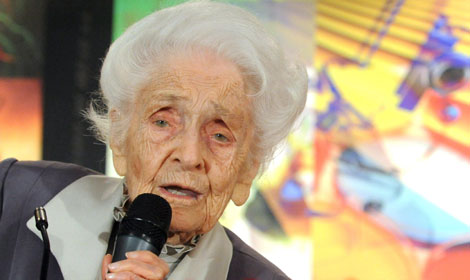
La premio Nobel italiana nació en Turín el 22 de abril de 1909

A principios de los 50, junto con el joven bioquímico norteamericano Stanley Cohen, Levi-Montalcini da un vuelco a su carrera: descubre e identifica el NGF, el Factor de crecimiento nervioso. Años después, en 1986, estas investigaciones valdrán a los dos el Premio Nobel de Medicina. Es una etapa particularmente feliz de su vida, llena de satisfacción profesional: la misma que, de haber seguido la

Saturday, April 18, 2009

Nana Cadavieco

http://www.enoriente.com/noticias-magazine-105/arte-y-espectlos-magazine-112/14571-karmapa-pablo-dagnino-y-nana-cadavieco-recordaran-a-soda-stereo-en-concierto:

"...Nana Cadavieco es cantautora y para finales de abril 2009 lanzará su primer disco titulado “Exposé”, producido por Erik Aldrey (Le Picó, Londres/Caracas) en Sala de Máquinas y masterizado en 360º Studios, Londres, por Richard Beetham. “Exposé” cuenta con la participación de talentosos músicos venezolanos como Wincho Schäfer (Sentimiento Muerto), Rafael Cadavieco (Zapato 3) y Ezequiel S. Valencia (Cabezon Key - Tribop). También hacen apariciones especiales Gabriel Figueira, Armando Alvarez y Abiram Brizuela, de Gaêlica..."

Thursday, April 16, 2009

Females get along fine without males - in the world of tropical ants

The Mycocepurus smithii ant is the first known to be a male-free species.

Experts have discovered a South American species that is exclusively female and reproduces asexually by cloning the queen. Reproduction without sex is fairly common in the ant world, but the Mycocepurus smithii is the first known to be a male-free species. The phenomenon takes the stress out of finding a mate and may help keep the peace in colonies, the scientists believe. The findings run counter to scientific theories that say asexuality is an evolutionary disadvantage because it eliminates mutations and generates genetic diversity more slowly than sexual reproduction.
One possible advantage of asexual reproduction is that it avoids the need to find a mate and the efforts associated with mating, according to the researchers.

Wednesday, April 15, 2009

Do particles have a free will ?

Mathematicians John H. Conway (inventor of the cellular automaton Game of Life, between many other) and Simon Kochen of Princeton University have proven that if

human experimenters demonstrate 'free will'

in choosing what measurements to take on a particle, then the axioms of quantum mechanics require that the free will property be available to the particles measured, or to the universe as a whole.

Self-Collimation of Light over Millimeter-Scale Distance in a Quasi-Zero-Average-Index Metamaterial

Inspired by the concept of complementary media, we experimentally demonstrate that an engineered metamaterial made of alternating, stripe layers of negatively refracting (photonic crystals) and positively refracting (air) materials strongly collimates a beam of near-infrared light. This quasi-zero-average-index metamaterial fully preserves the beam spot size throughout the sample for a light beam traveling through the metamaterial a distance of 2 mm—more than 1000 times the input wavelength lambda=1.55 µm. These results demonstrate the first explicit experimental verification of optical antimatter as proposed by Pendry and Ramakrishna [J. Pendry and S. Ramakrishna, J. Phys. Condens. Matter 15, 6345 (2003)], using two complementary media in which each neff=-1 layer appears to annihilate an equal thickness layer of air.

ARI FLEISCHER: Everyone Should Pay Income Taxes

In addition to exempting almost 50% of the country from income taxes, today nearly every other social cause is given a loophole -- or a preference -- in the tax code. Want to buy a hybrid vehicle? You get a tax break. Do you own a solar water heater? You get a credit. Want to give to charity? You get a deduction. Own a house? There's another tax deduction for you. How about college savings, certain medical costs, and retirement savings? Yes, yes, and of course yes. Did you move, pay alimony, or "provide housing to a Midwestern displaced individual"? More deductions, credits and exemptions there too, if you qualify.

A very small number of taxpayers -- the 10% of the country that makes more than $92,400 a year -- pay 72.4% of the nation's income taxes.

Monday, April 13, 2009

Girl born a record 22 years after father's sperm is frozen

A former leukaemia patient who had his sperm frozen as a teenager has fathered a baby after doctors successfully thawed his sample a record 22 years later. Chris Biblis was 16 when doctors told him that he needed radiotherapy that would leave him sterile and recommended before going ahead with the life-saving treatment that they put a sample of his sperm into cryogenic storage for future use. Now aged 38, he is celebrating the birth of a healthy baby daughter, Stella, who was conceived after scientists injected a defrosted sperm into an egg from his wife, Melodie, and implanted it in her uterus.

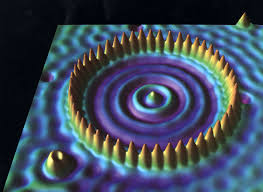
Tireless electrons in mesoscopic gold rings

The surprising prediction that currents can flow forever in small normal metal rings was confirmed almost twenty years ago. Highly precise new experiments find good agreement with theory that was not seen till now.

It is well known that in a superconductor electrons react strongly to a magnetic field, creating currents that try to shield the flux in the bulk case (the Meissner effect) or cause the flux to be quantized in units of the “two-electron flux quantum,” Φs≡h/2e, in a ring-type geometry [1, 2, 3]. This flux quantization forms the basis of the SQUID (Superconducting Quantum Interference Device) magnetometer, which consists of a superconducting loop with two weak links and has a maximum supercurrent that is extremely sensitive to the flux through the loop.

Friday, April 10, 2009

First large superconducting magnet to be launched in space

The recently completed superconducting magnet for the space borne Alpha Magnetic Spectrometer (AMS) was designed, modelled and detailed using Solid Edge and supported by Cutting Edge Solutions. The 2tonne magnet has a 3m diameter and was produced by Oxford based Scientific Magnetics. It is the first, large superconducting magnet to be launched into space, where it will reside on the main truss of the International Space Station from 2010.

Thursday, April 9, 2009

SICK ASSEMBLED

SICK ASSEMBLED strives to reach their audience on a relative and emotive level. This solid foursome is turning upward in an antithetic way. Strong melodies, powerful hooks & a heavy edge define all that is SICK ASSEMBLED. This heavy music that stands apart from today’s field of cookie-cutter rock bands is a true feast for the senses.

"Music & writing is an outlet shadow of my soul. I sleep for inspiration & find answers in my unhinged dreams & It’s a satisfying feeling to be able to welcome all to share these gifts”

Chelsia Rose (vocalist) met Craig Demsky (guitar) and Brad Pridemore (bass) in 2006, and quickly found a creative chemistry. The "sickness" was forming.

The songs rapidly poured out, and 2007 saw SICK ASSEMBLED’S first self-released EP and live shows.

THIS BAND WAS DESIGNED TO ENHANCE & INFLUENCE YOUR ENVIRONMENT.